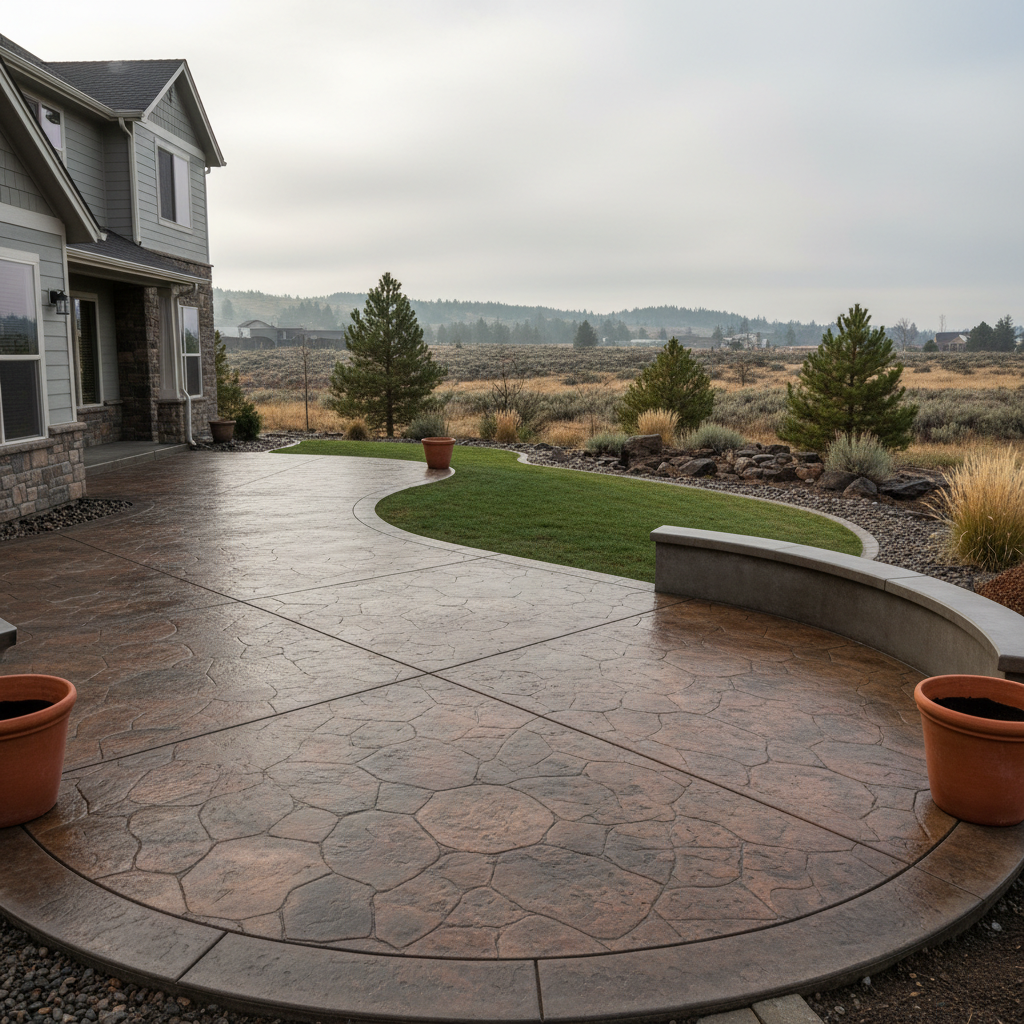
Homeowners often pour a patio or stamp a walkway only to watch it crack or fade before the first hard freeze. Out here in Ephrata, our desert climate puts concrete through extreme weather conditions. Between the scorching summer days baking the basin and freezing winter nights dropping down off the Waterville Plateau, timing matters just as much as the mix design itself.
When you are thinking about adding stamped concrete or stained finishes to your property, you cannot just pick any random Tuesday on the calendar. Property owners need to know about scheduling decorative work around our local weather patterns.
Why Ephrata Climate Dictates Your Pour Window
Grant County does not receive a massive amount of rainfall, but what we do receive comes with extreme temperature swings. Summer highs routinely blast past ninety degrees, and that dry basin air sucks the moisture right out of fresh concrete much too fast. When concrete cures too quickly, it shrinks improperly, leading to surface crazing and structural weakness.
On the flip side, trying to lay decorative overlay or colored stamp patterns late in the fall is a gamble. Once nighttime temperatures drop below forty degrees consistently, the hydration process slows to a crawl. If a sudden October frost hits before your slab has reached proper strength, you will be looking at spalling and scaling by spring.
Aim for the sweet spot in late spring or early fall. During these months, daytime highs sit comfortably in the seventies, letting the cement cure at an even pace so the integrally colored pigments and release agents set up right.
Planning Your Decorative Concrete Schedule
Everybody wants their stamped patio ready by Memorial Day or the Fourth of July. Because of that short window, contractors receive a high volume of calls starting every March. If you want decorative work done, you have to plan ahead.
- Call contractors in late winter before the rush hits.
- Clear your schedule for site prep and excavation.
- Allow up to a week for proper curing before putting heavy patio furniture on the surface.
Aim High Concrete Co has torn out plenty of rushed jobs where someone tried to pour a stamped driveway during a July heatwave without proper retarders. It is difficult to watch expensive custom work turn to dust because the sun baked it too fast.
Protecting Your Investment Year-Round
Once your decorative concrete is safely cured, the work is not quite finished. Ephrata soil tends to be sandy and alkaline, which means settling can happen if water pools near your foundation. Keep your gutters cleared so runoff does not wash away the base beneath your new slab.
Sealing is your best defense against our climate. You will want to apply a quality breathable sealer every two to three years. This keeps our intense summer sun from fading your slate or flagstone stamps and stops winter moisture from sneaking into microscopic pores before a freeze-thaw cycle can expand it.
Take care of the surface, wash off winter de-icing salts early, and your decorative concrete will look sharp for 15 to 20 years or more without needing major repairs.